Are you looking to request a new generator? CLICK HERE TO LEARN MORE!

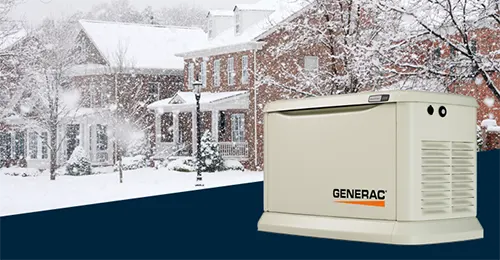
Winter has a way of exposing every weak point in a home’s preparedness plan. Heavy snow, ice, high winds, and falling branches can interrupt utility service with little warning—sometimes when temperatures are at their lowest. A Generac home standby generator can help keep essential systems running automatically, giving your household greater confidence when the power goes out.
When severe weather appears in the forecast, demand for generators, site evaluations, permits, and installation appointments can rise quickly. Planning ahead gives you time to choose an appropriately sized system, prepare the installation area, arrange professional installation, and confirm that the generator is ready before winter conditions make the process more difficult.
During an outage, electricity supports much more than lights. Depending on the generator’s capacity and your home’s configuration, a standby system may be designed to power critical needs such as:
A qualified generator professional can perform a load assessment and help determine whether you need coverage for essential circuits or a broader whole-home solution. Proper sizing matters: the goal is a system designed around your actual priorities—not simply the largest unit available.
Unlike a portable generator that must be moved, fueled, and connected during an outage, a permanently installed standby generator works with an automatic transfer switch. When utility power is interrupted, the system can start and transfer the selected electrical load without requiring you to go outside in freezing conditions. When utility power returns, it transfers the home back and shuts down.
Schedule a site evaluation. Review placement, fuel supply, electrical requirements, local codes, and the circuits you want to protect.
Confirm professional installation. Standby generators should be installed by qualified professionals and in accordance with manufacturer instructions and applicable codes.
Complete recommended maintenance. If you already own a generator, review its service schedule and address any alerts before severe weather arrives.
Keep the area clear. Remove leaves, snow, ice, and other debris while maintaining the clearances specified for your unit.
Review your household outage plan. Know which systems are backed up, where important contacts are stored, and what to do if the generator does not start.
Generators produce carbon monoxide, an odorless and potentially deadly gas. Never operate a portable generator inside a home, garage, basement, shed, or other enclosed space. Keep generators away from doors, windows, and vents, maintain working carbon-monoxide alarms, and always follow the manufacturer’s instructions and local requirements. For a standby system, keep exhaust and air-intake areas unobstructed and arrange service through a qualified technician.
The best time to think about backup power is before an outage tests your home. By planning early, choosing the right Generac standby generator, and completing installation and maintenance ahead of winter, you can be better prepared for whatever the season brings. Contact a local authorized Generac dealer to schedule a home assessment and discuss a system tailored to your household’s needs.
To learn more, visit South Shore Generator Sales & Service.
Whether your need is to power your business to keep on your production schedule or your home to keep your family safe and sound, South Shore Generator has the product diversity to meet all of your generator requirements. We are proud to sell and service generators from 2kW to 2000kW single set units and up to as large as 100MW utilizing Generac's innovative Modular Power Systems (MPS).


2696A Cranberry Hwy | Wareham, MA 02571 | Phone: 888-339-4248 | Fax: 508-291-2544
Copyright © 2026 South Shore Generator. All Rights Reserved. Created and Maintained by WSI Pro Marketing, Inc.


South Shore Generator is a woman-owned certified business in the state of MA.