Are you looking to request a new generator? CLICK HERE TO LEARN MORE!

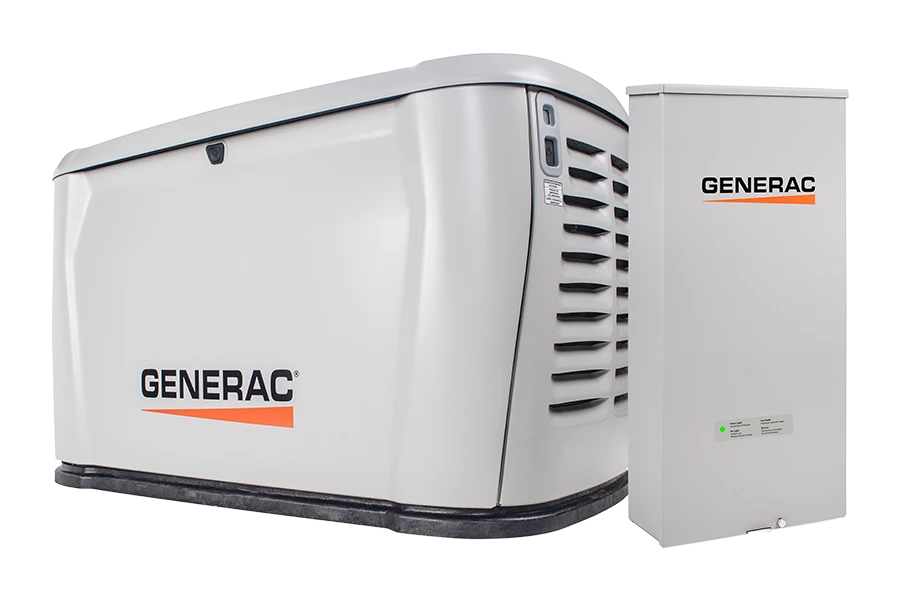
The right home generator size depends on your home’s electrical load, including essential appliances, heating and cooling systems, and other everyday power needs.
Many homeowners choose to power only the essentials during a power outage. This may include a refrigerator, sump pump, lights, outlets, and a furnace or air conditioner. In these cases, a smaller standby generator may be sufficient. However, if you want whole-home backup power (including central air conditioning, electric water heaters, kitchen appliances, and laundry equipment), you’ll likely need a larger generator with higher wattage capacity.
Generator capacity is measured in kilowatts (kW). Smaller homes with limited backup needs may require 10-14 kW, while larger homes or homes with multiple HVAC systems may need 20 kW or more.
Factors like square footage, fuel type, and whether your home uses natural gas or propane also play a role in determining the best fit.
As a general guideline:
Because every home is different, a professional load assessment is the most accurate way to determine the right generator size. A certified dealer can evaluate your electrical panel, calculate starting and running wattage requirements, and recommend a system that delivers reliable performance when you need it most.
Choosing the correct generator size ensures your home stays comfortable, connected, and protected during unexpected power outages.
To learn more, visit South Shore Generator Sales & Service.
Whether your need is to power your business to keep on your production schedule or your home to keep your family safe and sound, South Shore Generator has the product diversity to meet all of your generator requirements. We are proud to sell and service generators from 2kW to 2000kW single set units and up to as large as 100MW utilizing Generac's innovative Modular Power Systems (MPS).


2696A Cranberry Hwy | Wareham, MA 02571 | Phone: 888-339-4248 | Fax: 508-291-2544
Copyright © 2026 South Shore Generator. All Rights Reserved. Created and Maintained by WSI Pro Marketing, Inc.


South Shore Generator is a woman-owned certified business in the state of MA.