Are you looking to request a new generator? CLICK HERE TO LEARN MORE!

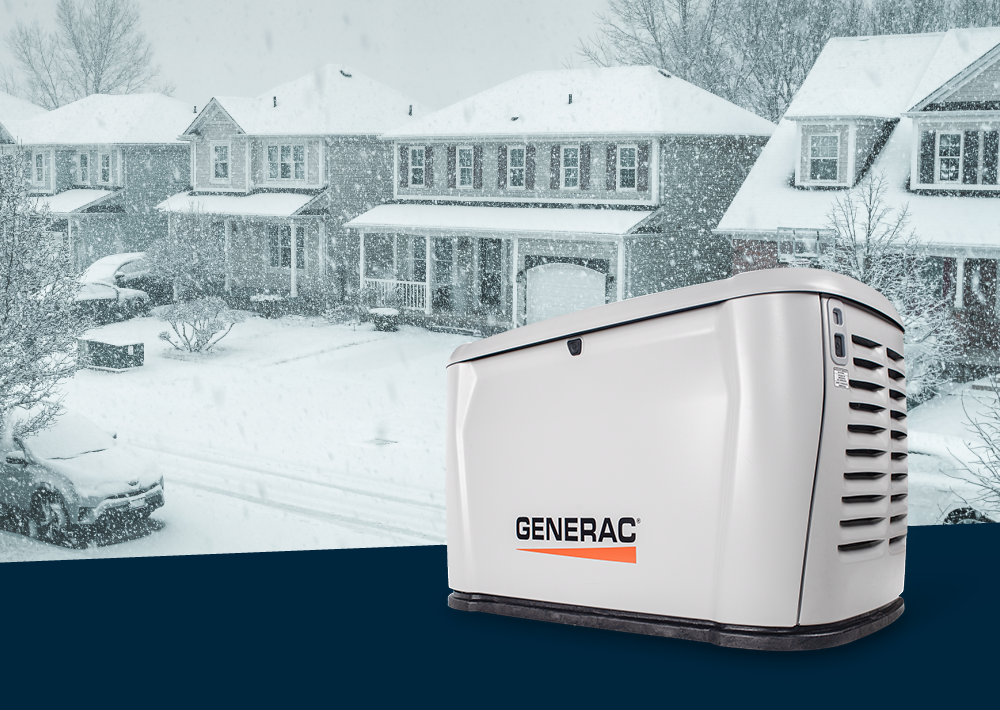
Start with your home’s power needs, fuel source, and installation requirements.
Choosing a permanent whole-home generator can feel overwhelming, especially if you do not know how much power your home requires. The best place to start is by identifying the systems you want running during an outage and comparing generator options based on capacity, fuel, and installation.
Make a list of the systems and appliances you want to operate during an outage. Common priorities include heating equipment, refrigerators, sump pumps, well pumps, lights, internet equipment, and home offices. If you want the generator to power nearly everything in your home, including central air conditioning or an electric water heater, you will likely need a higher-capacity unit.
Generator capacity is measured in kilowatts, or kW. A smaller whole-home system may cover essential household equipment, while a larger unit can handle more of your home’s electrical demand. Your home’s size alone does not determine the right generator; the appliances and electrical systems you plan to run matter more.
A professional load calculation is the most reliable way to determine the appropriate size. It accounts for the power each system uses and the extra energy some equipment requires when starting.
Permanent generators typically use natural gas or liquid propane. If your Massachusetts home already has natural-gas service, a natural-gas generator may be a convenient option. Homes without natural-gas service may use a propane tank instead.
Compare fuel availability, tank requirements, operating costs, and expected winter usage before choosing a model. Your installer can explain which fuel option best fits your property.
A whole-home generator works with an automatic transfer switch, which connects the generator to your home’s electrical system when utility power is interrupted. Ask whether the system includes a whole-home transfer switch or a managed-load setup that prioritizes certain circuits.
Permanent generators are installed outdoors on a prepared base and must be placed where they can be properly connected to your home, fuel supply, and electrical panel. The available space, distance from the home, local requirements, and fuel-line layout can all affect installation.
When comparing models, look at output capacity, warranty coverage, remote monitoring, noise ratings, maintenance requirements, and local service availability. A generator is a long-term home investment, so dependable support matters as much as the equipment itself.
The right permanent whole-home generator depends on your home’s electrical demand, preferred fuel source, installation conditions, and budget. Begin with a list of the systems you want to operate, then speak with a qualified installer about sizing and setup. South Shore Generator Sales & Service can help you compare generator options and find the right starting point for your Massachusetts home.
To learn more, visit South Shore Generator Sales & Service.
Whether your need is to power your business to keep on your production schedule or your home to keep your family safe and sound, South Shore Generator has the product diversity to meet all of your generator requirements. We are proud to sell and service generators from 2kW to 2000kW single set units and up to as large as 100MW utilizing Generac's innovative Modular Power Systems (MPS).


2696A Cranberry Hwy | Wareham, MA 02571 | Phone: 888-339-4248 | Fax: 508-291-2544
Copyright © 2026 South Shore Generator. All Rights Reserved. Created and Maintained by WSI Pro Marketing, Inc.


South Shore Generator is a woman-owned certified business in the state of MA.