Are you looking to request a new generator? CLICK HERE TO LEARN MORE!

National Hurricane Preparedness Week is May 3-9, 2026.
Be ready for hurricane season. Take action TODAY to be better prepared for when the worst happens. Understand your risk from hurricanes, and begin pre-season preparations now. Make sure you have multiple ways of receiving forecasts and alerts, and know what to do before, during, and after a storm.
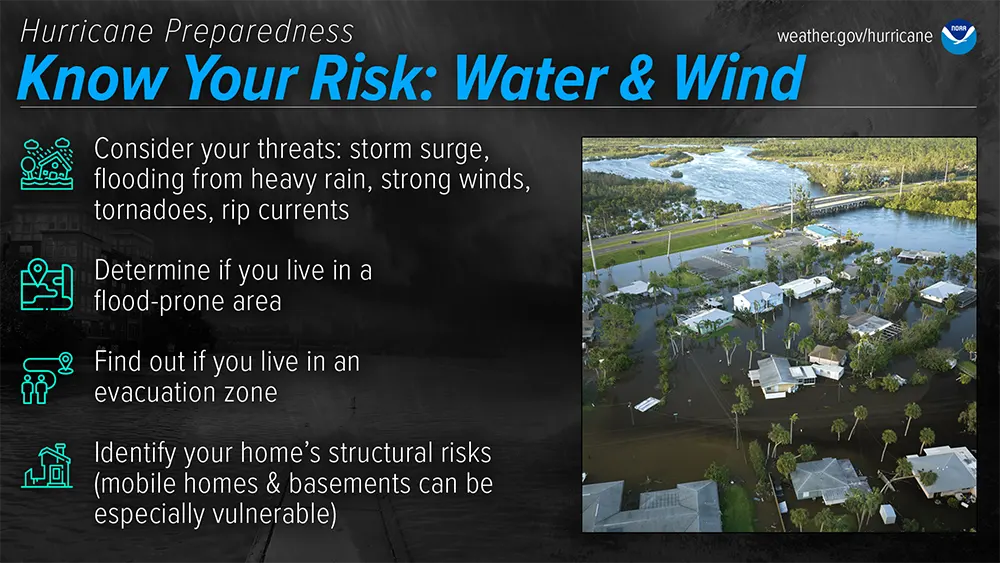
Find out today what types of wind and water hazards could happen where you live. Hurricanes are not just a coastal problem. Impacts from wind and water can be felt hundreds of miles inland, and significant impacts can occur regardless of the storm’s strength. Know if you live in an area prone to flooding, if you live in an evacuation zone, and identify any structural weaknesses in your home.
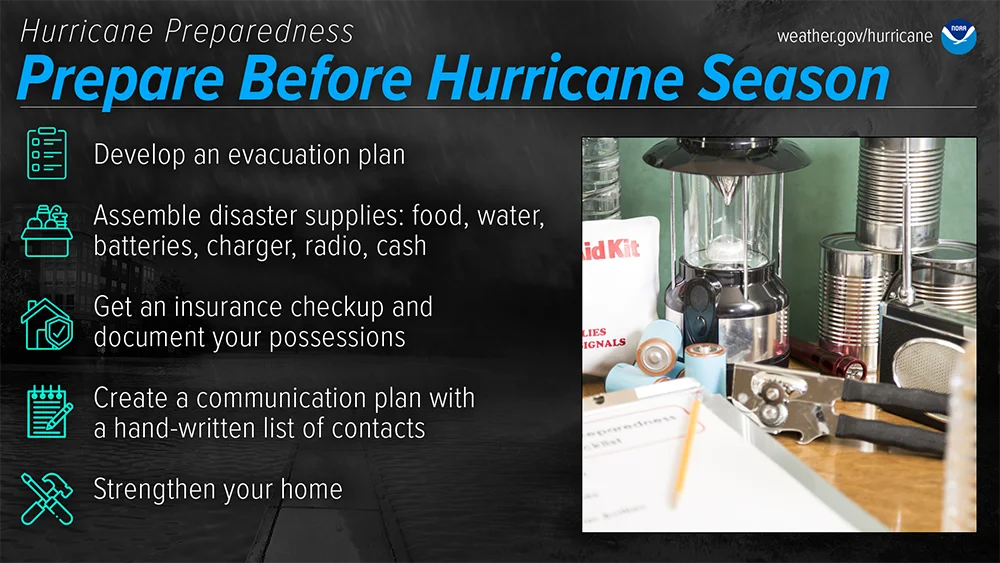
The Atlantic and central Pacific hurricane season (includes Hawaii) officially runs June 1 through November 30. The eastern Pacific hurricane season runs from May 15 to November 30.
However, the best time to prepare is well before the official start of the season. Avoid having to rush through potentially life-saving preparations by waiting until it’s too late. Get your disaster supplies while the shelves are still stocked, and get that insurance checkup early, as flood insurance requires a 30-day waiting period.
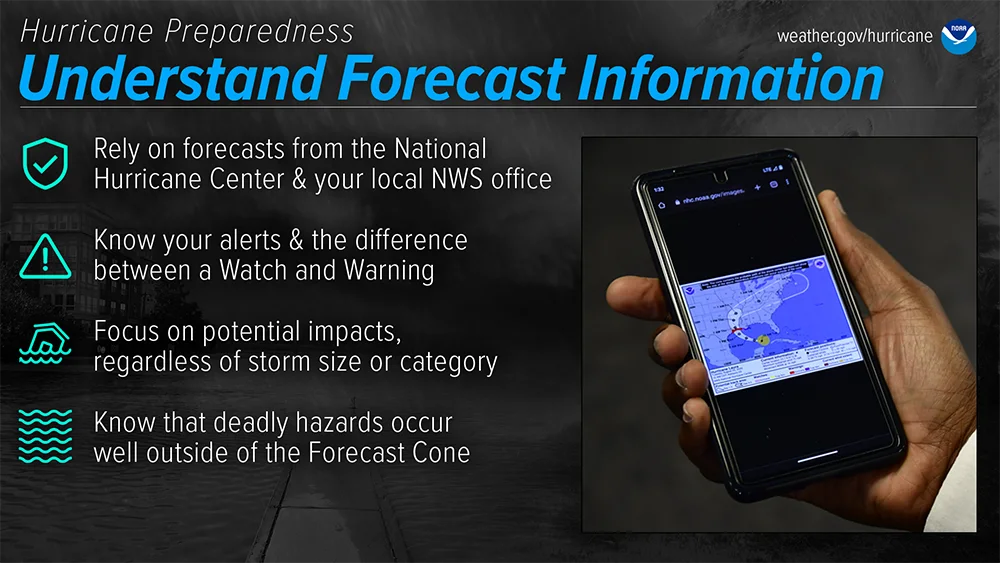
National Weather Service forecast products can tell you a lot about what is expected to happen with a storm, including the storm’s paths, rainfall amounts, wind speeds, and more. There is a lot of information available days ahead of a storm, and it is important to understand what it means.
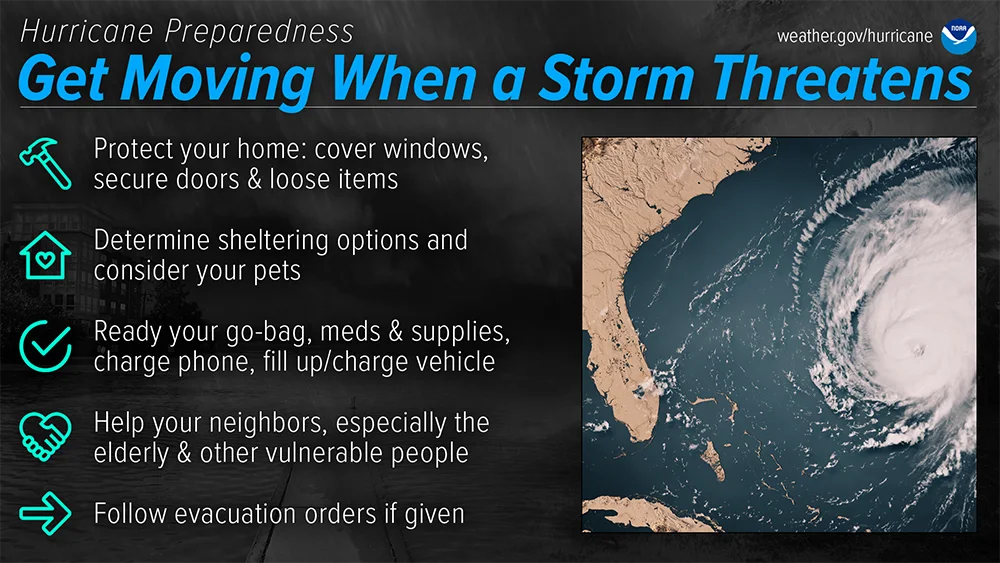
When a storm is forecast to impact your area, take action immediately to be ready. Ideally, longer-term preparedness actions such as having disaster supplies and an evacuation plan will have already been done before hurricane season, when the stores are stocked and time is on your side. When a storm threatens, there’s a lot more to do.
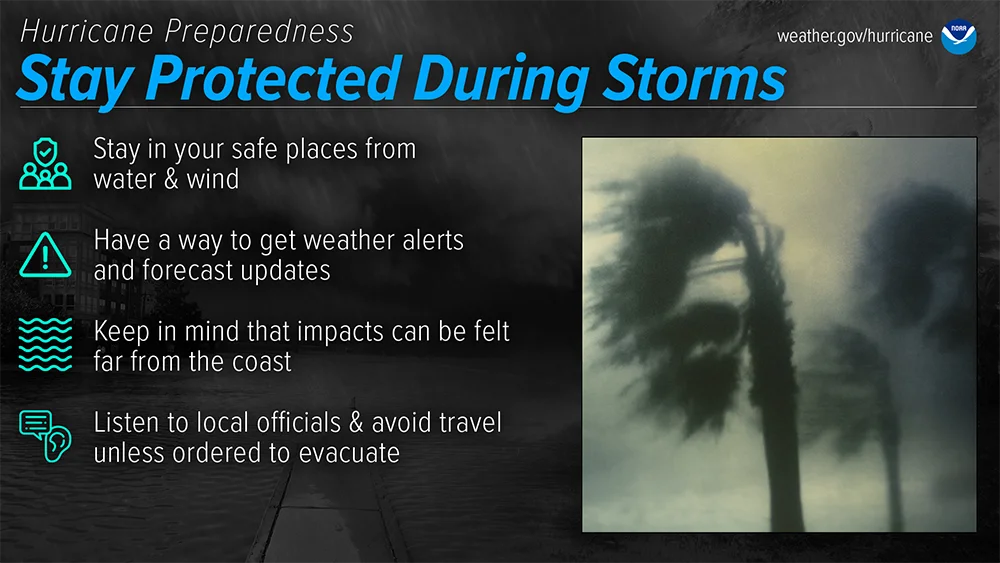
During a storm, whether you’ve evacuated or are sheltering in place, know what to expect from the hazards you may face. Remain vigilant, stay up-to-date with the latest forecasts and alerts, and continue to listen to local officials.
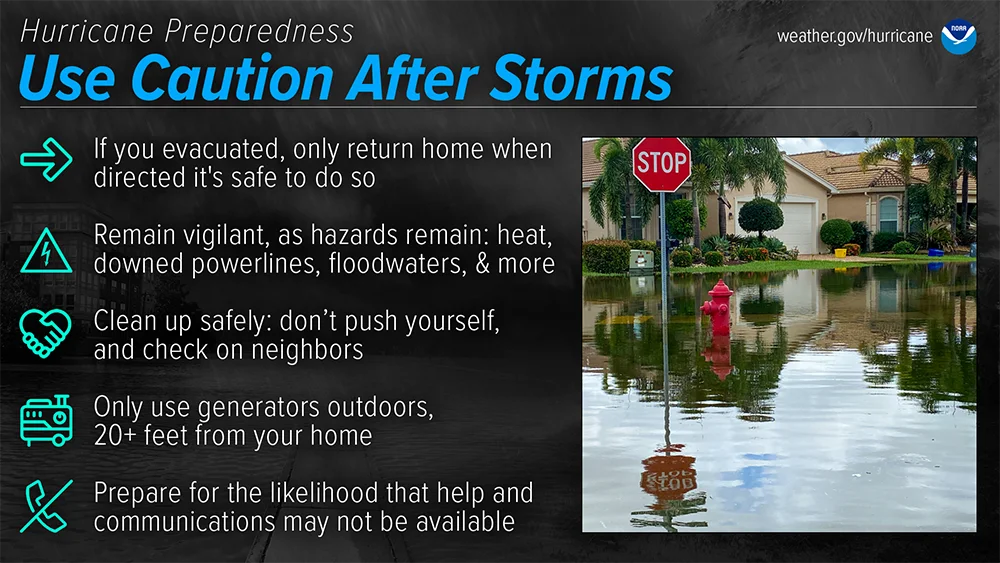 >
>Dangers remain even after the skies turn blue. This is NOT the time to put your guard down. Nearly half of hurricane fatalities occur after the storm.
If you evacuated, only return home only when told to do so
Return home ONLY when officials say it is safe. Check with local officials both where you’re staying and back home before you travel.
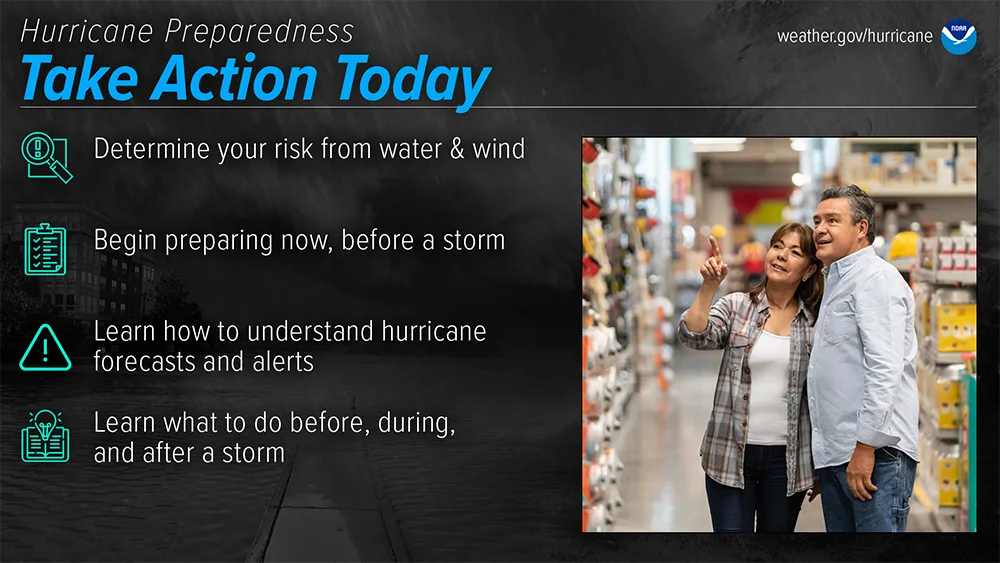
Are you ready for hurricane season? Take action TODAY to be better prepared for when the worst happens. Understand your risk from hurricanes, and begin pre-season preparations now. Make sure you understand how to interpret forecasts and alerts, and know what to do before, during, and after a storm. Even if you are already well-prepared and knowledgeable, there may be additional things you could do or learn to be even more prepared.
Source: www.noaa.gov
Whether your need is to power your business to keep on your production schedule or your home to keep your family safe and sound, South Shore Generator has the product diversity to meet all of your generator requirements. We are proud to sell and service generators from 2kW to 2000kW single set units and up to as large as 100MW utilizing Generac's innovative Modular Power Systems (MPS).


2696A Cranberry Hwy | Wareham, MA 02571 | Phone: 888-339-4248 | Fax: 508-291-2544
Copyright © 2026 South Shore Generator. All Rights Reserved. Created and Maintained by WSI Pro Marketing, Inc.


South Shore Generator is a woman-owned certified business in the state of MA.